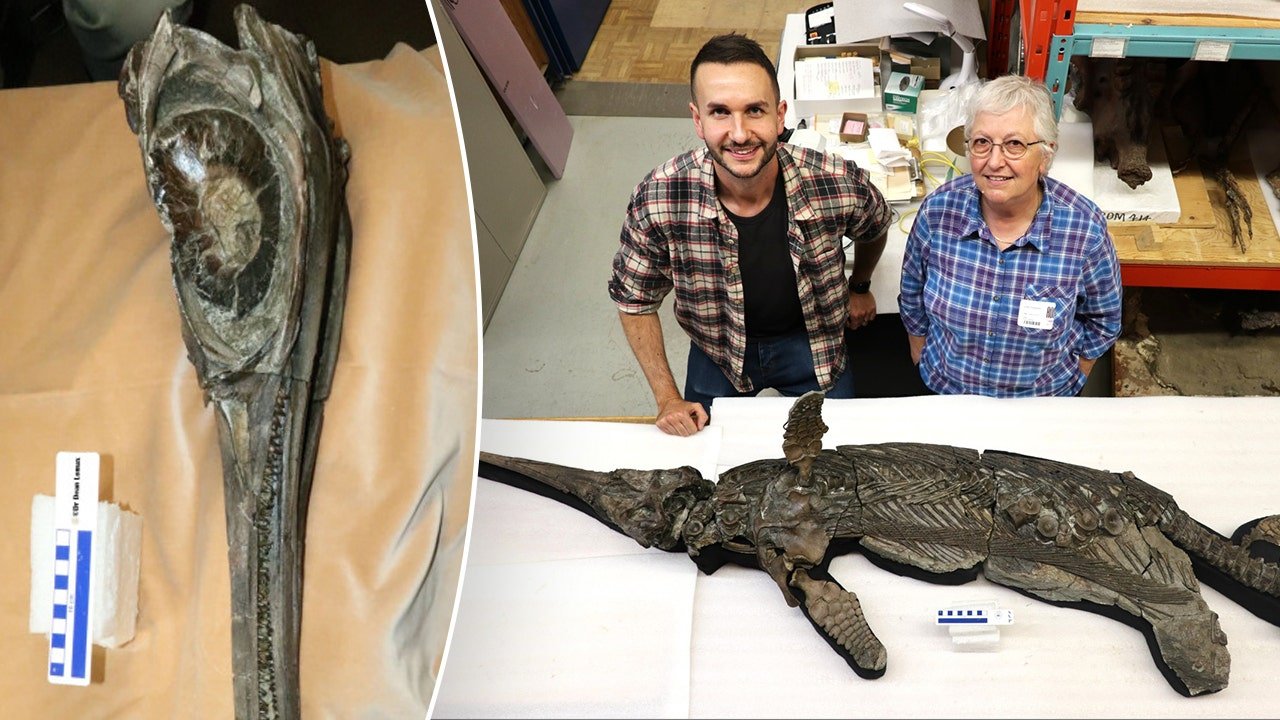
Paleontologists identify 193-million-year-old ‘sword dragon’ skeleton
NewYou can listen to Fox News articles now!
Paleontologists have finally solved the mystery behind the elusive “sword dragon” skeleton found on Britain’s Jurassic Coast.
In an Oct. 10 press release from the University of Manchester, officials said the skeleton was found near Dorset. Gold cap In 2001 – a newly recognized species of ichthyosaur.
Lived around the same time As a dinosaur, Ichthyosaurs were air-breathing marine reptiles that once “ruled the ancient oceans,” according to authorities.
The ancient reptile has been named Xiphodracon goldencapensis or “Sword Dragon of Dorset”. Scientists say it dates back to the Plinsbachian period, roughly 193 to 184 million years ago.
Dean Lomax, an honorary research fellow at the University of Manchester, was one of the paleontologists who gave the creature its new name, which he said was “one of the coolest things” about their method.
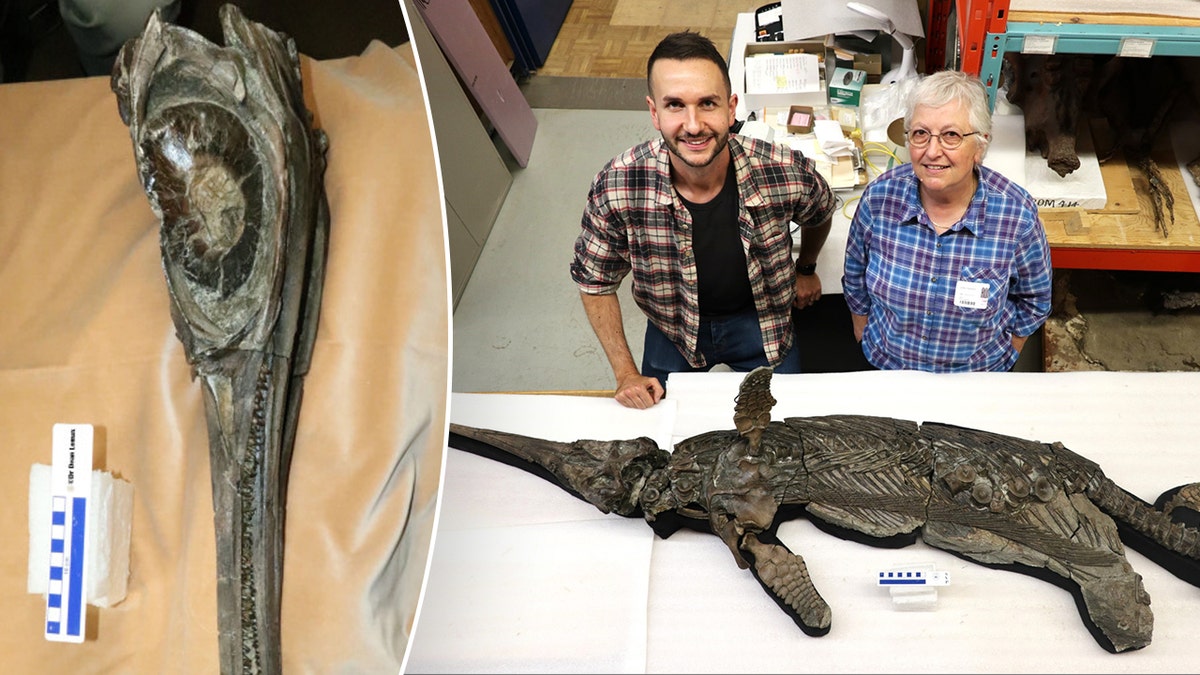
Scientists have identified a new species of ichthyosaur discovered on the UK’s Jurassic Coast, naming it the “Sword Dragon of Dorset”. (Dean Lomax / University of Manchester)
“We chose xiphodracon because of the long, sword-like snout – xipho from the Greek xiphos for sword – and dracon, Greek and Latin for dragon, in reference to ichthyosaurs being referred to as ‘sea dragons’ for more than 200 years,” he said.
Paleontologists said the Xiphodracon was about 10 feet long and ate fish and squid.
Click here to sign up for our lifestyle newsletter
“The remains also show what may be traces of his last meal,” the press release added.
“This is the world’s most complete prehistoric reptile from the Plinsbachian period.”
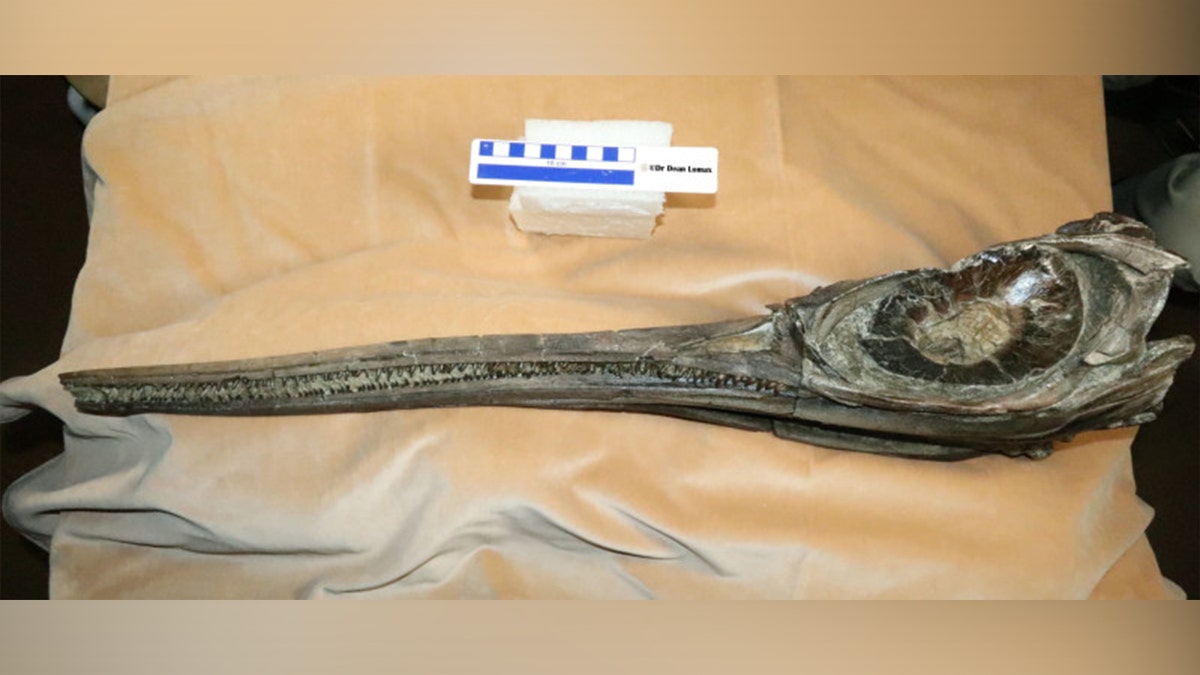
Fossil remains of Xiphodracon goldencapensis were first discovered in 2001 near Golden Cap, Dorset. (Dean Lomax / University of Manchester)
The ichthyosaur has fascinated experts for more than two decades, not only because of the mystery behind its species, but because of its exceptional status.
Click here for more lifestyle stories
“The fossil is almost completely preserved in three dimensions,” the university said in a press release.
“The skeleton includes a skull with (a) huge eye socket and a long sword-like snout.”
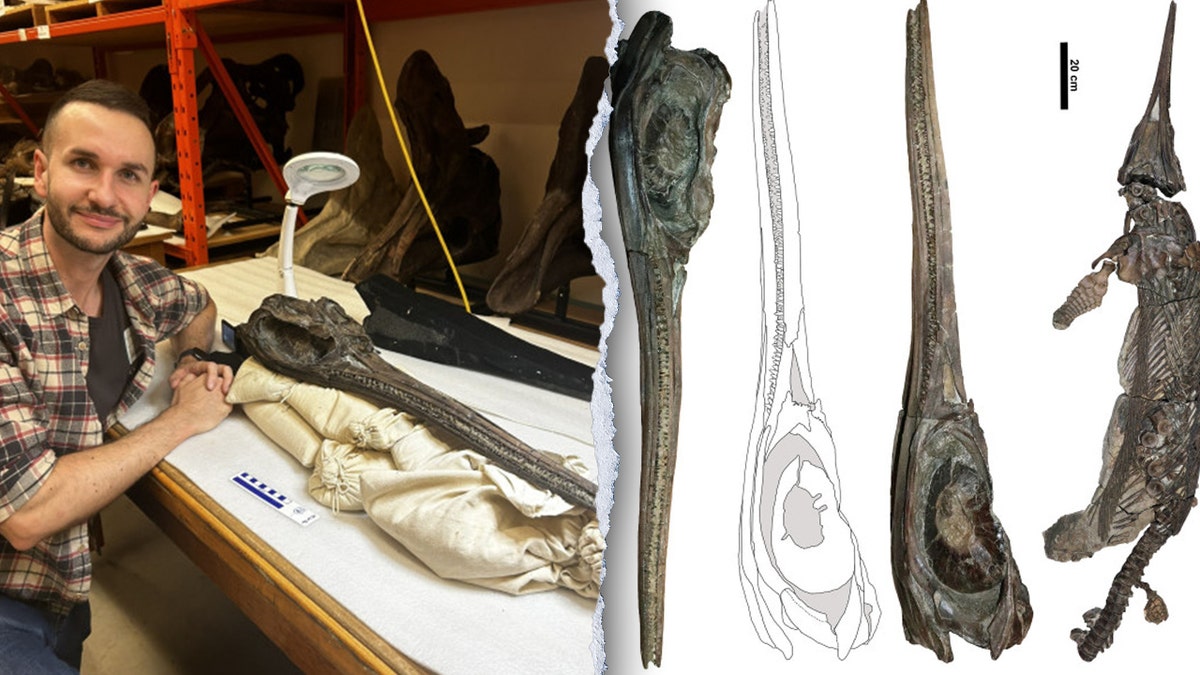
Dean Lomax, a researcher at the University of Manchester, helped name the species. (Dean Lomax / University of Manchester)
The ancient reptile “is the only known example of its kind in existence and helps fill an important gap in the evolutionary fossil record of ichthyosaurs.”
Test yourself with our latest lifestyle quiz
Lomax said he first saw the skeleton in 2016.
“At the time, I knew it was unusual, but I didn’t expect it to play such a significant role in helping to fill a gap in our understanding of a complex faunal turnover during the Plinsbachian,” he said.

The Jurassic Coast is famous for its ancient marine fossils. (Saiful Islam/Majority World/Universal Images Group via Getty Images)
They described Xiphodracon as a “missing piece of the ichthyosaur puzzle” because its discovery helps researchers better understand the extinction timeline.
Click here to get the Fox News app
“This is a very important time for ichthyosaurs, as many families have become extinct and New families emerged.”
Share this content:













Post Comment